
Physical fitness
Mobility, balance, stamina, coordination and body awareness.
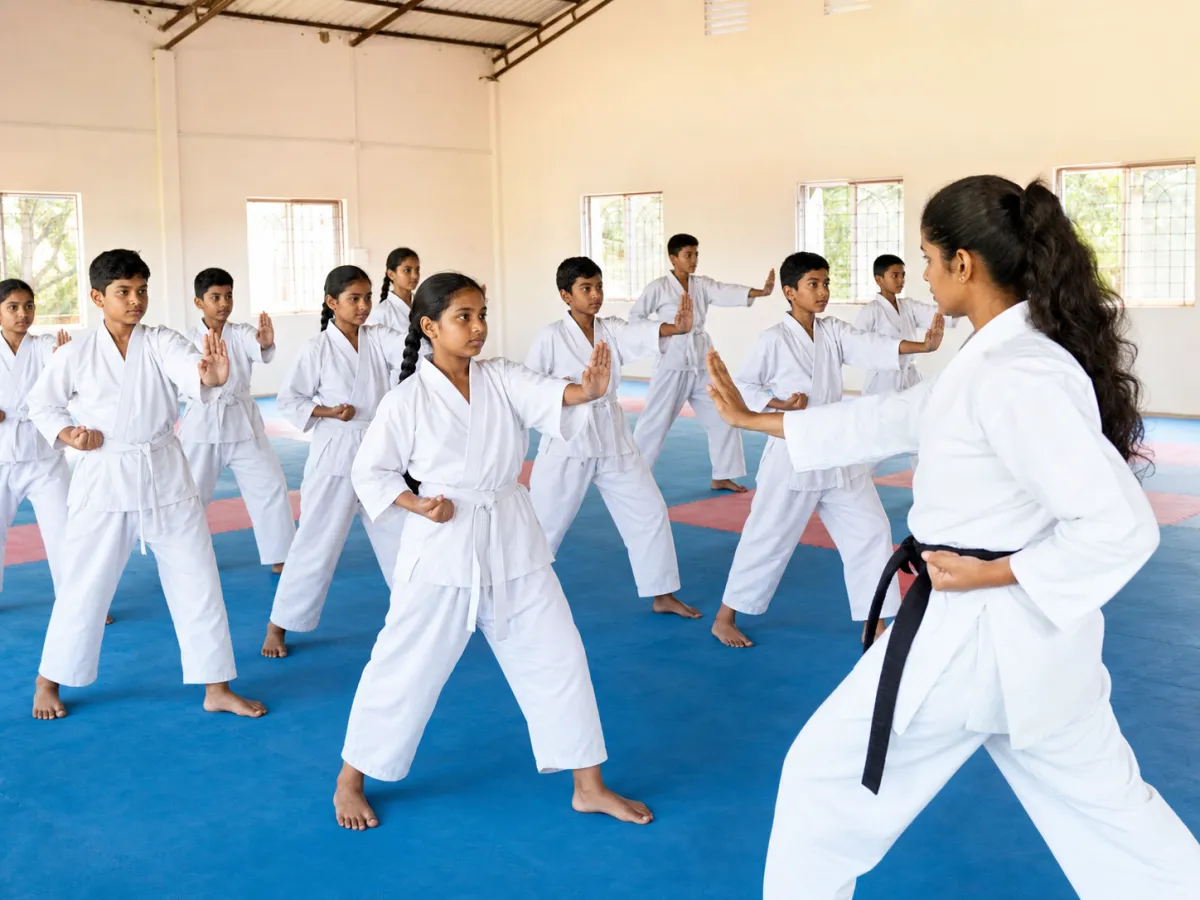
Age-appropriate martial arts training designed to develop fitness, coordination, discipline and responsible self-defence awareness.
Structured martial arts practice can help young people improve movement, concentration and self-control. Sessions emphasise safe technique, respect, regular practice and progress appropriate to each age group.
Participants work through foundational movement, balance, coordination and technique before progressing to more demanding practice. Training is intended to build healthy habits and confidence without encouraging aggression.
Mobility, balance, stamina, coordination and body awareness.
Listening, consistency, punctuality and control under instruction.
Supervised practice with attention to form and age suitability.
Calm decision-making, respect and self-defence awareness.
Activities, expectations and responsibility develop progressively with age and experience.
Foundational movement, balance, coordination and discipline.
Developing technique, fitness and consistent practice habits.
More advanced control, conditioning and responsibility.
Advanced practice and opportunities to support younger groups.
Each program combines explanation, demonstration, guided practice and reflection. The exact sequence is adapted to the active group.
Ask about this programAvailability note: Assessment standards, prerequisites and recognition for the belt sequence should be confirmed with the active training centre.
Testing standards, timelines and recognition should be confirmed with the active training centre.
| Belt / level | Rank |
|---|---|
| White | 10th kyu |
| Yellow | 9th kyu |
| Orange | 8th kyu |
| Green | 7th kyu |
| Blue | 6th kyu |
| Purple | 5th kyu |
| Red | 4th kyu |
| Brown | 3rd kyu |
| Brown | 2nd kyu |
| Brown | 1st kyu |
| Belt / level | Rank |
|---|---|
| Black Belt | 1st Dan |
| Black Belt | 2nd Dan |
| Black Belt | 3rd Dan |
| Black Belt | 4th Dan |
| Black Belt | 5th Dan |
| Black Belt | 6th Dan |
| Black Belt | 7th Dan |
| Black Belt | 8th Dan |
| Black Belt | 9th Dan |
| Black Belt | 10th Dan |
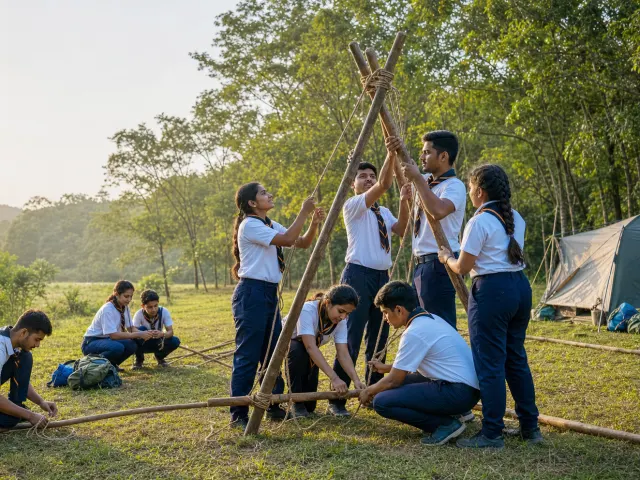
Association representatives can visit schools and colleges to train students through a four-part delivery model.
The right skills at the right time, all-round development through scouting philosophy and an inclusive approach.
Balance between school and training, regular trainer workshops and exposure to current training practices.
Regular assessment, parent progress reports and student fitness report cards where implemented.
Necessary Scouts and Guides equipment and infrastructure required to conduct training at schools.
Ask about participation, volunteering or bringing this program to a school, college or community group.